Few pairs of trading terms cause as much back-and-forth debate as MSS and CHoCH. Some educators use them as if they mean exactly the same thing. Others insist there’s a clear, important gap between them. Neither camp is entirely wrong, which is exactly why this topic gets confusing.
This SMC guide walks through where the two terms actually come from, where the real overlap sits, and how to use both without getting tangled up in a debate that, honestly, doesn’t have one single correct answer.

What is the Origin of MSS?
MSS stands for Market Structure Shift, and it belongs to the ICT side of the trading world — a vocabulary built by Michael J. Huddleston and later adopted, expanded, and sometimes reshuffled by a large community of traders who studied his material.
At its core, MSS describes the moment price breaks a swing point in a direction that goes against whatever trend was previously in place. If a market has been rising, printing a series of higher lows, an MSS happens once one of those higher lows finally gets broken.
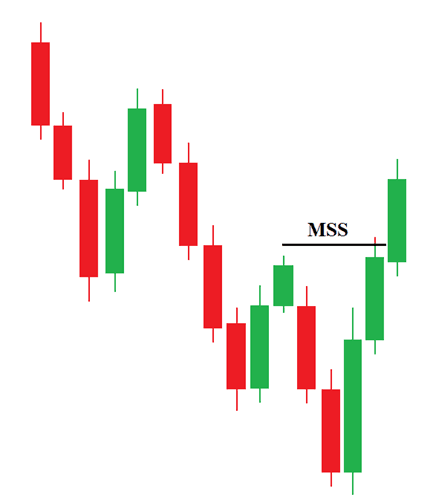
The label is usually attached to shifts happening on a shorter or more immediate timeframe — the kind of structural break a trader might use to time an entry within a session, rather than to call a change in the multi-week trend.

Where CHoCH Comes From?
CHoCH stands for Change of Character, and it sits more within the broader Smart Money Concepts vocabulary — a slightly different but heavily overlapping community from the one that grew around ICT specifically.
The mechanics are, on paper, nearly identical to MSS. CHoCH also marks the first break of structure against the prevailing trend. In a downtrend printing a series of lower highs, CHoCH is the label given to the moment one of those lower highs finally gets taken out. Many educators describe CHoCH as representing a bigger, more meaningful shift than a routine short-term break.
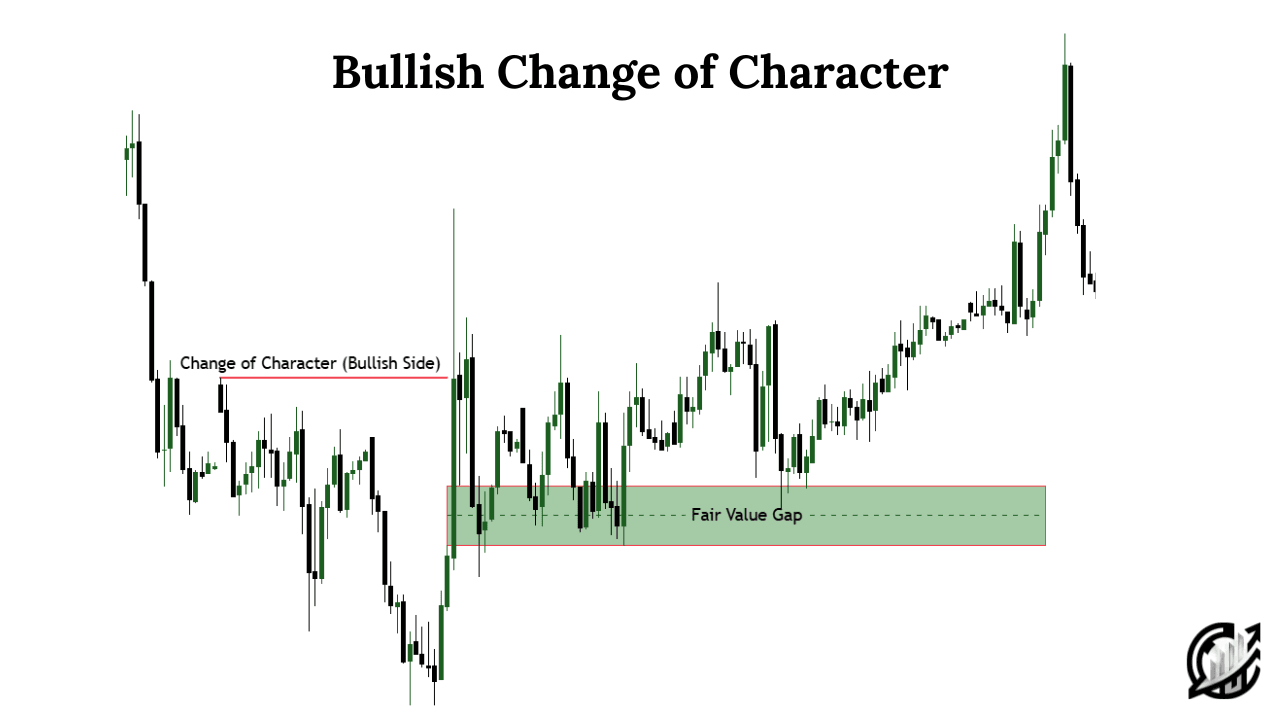
What is the Difference between MSS vs CHOCH?
Here’s the honest answer: it depends heavily on who you’re learning from. Some traders and educators treat MSS and CHoCH as interchangeable labels for the exact same event — a break of structure against the trend — just borrowed from two slightly different corners of the same broader community.
Others draw a sharper line. In that version, CHoCH refers to the first, often smaller signal that momentum might be turning, while MSS is reserved for a more decisive, confirmed break — one usually backed by a stronger, more forceful candle. Under this reading, a CHoCH can happen and then simply fail, price snapping back to the original trend, while an MSS is treated as a heavier, more trustworthy signal precisely because it demands more from price before it counts.
A third grouping leans the opposite direction, treating CHoCH as the larger, trend-defining event and MSS as the smaller, more local one that can happen repeatedly inside a single CHoCH-confirmed move. You will genuinely find all three framings taught by different, credible sources.
None of these three camps is simply making things up. Each one is internally consistent — the trouble only starts when content from different camps gets mixed together without anyone flagging that the underlying definitions don’t quite match. A trader who learned MSS from one course and CHoCH from a completely different creator can end up applying two definitions that were never designed to sit side by side in the first place.
Why the Disagreement Exists?
Both terms grew out of overlapping but separately evolving communities. ICT content and SMC content share a huge amount of common concepts— liquidity, order blocks, market structure — but they were not built by a single, centralized authority handing down one fixed dictionary.
Different educators picked up similar ideas, gave them names that felt intuitive to them, and taught those names to their own audiences. Over time, those audiences mixed together on the same forums and comment sections, and the terms started colliding without ever being formally reconciled.
This is not unique to MSS and CHoCH. Plenty of trading vocabulary suffers from the same drift, where a concept gets rediscovered or renamed by a new voice in the space without full awareness of how an earlier voice already defined it.
What Actually Matters in MSS and CHOCH?
Given all that disagreement, the more useful question isn’t “which definition is correct,” but “what is the break of structure actually telling me, regardless of which name I attach to it.” A break of a swing point against the prevailing trend is a real, observable event on a chart. Whether you call that event MSS, CHoCH, or something else entirely, the underlying signal is the same: the pattern of higher lows or lower highs that had been defining the trend just failed.
What should change your read of that event isn’t the label — it’s the context around it. Did the breaking candle show strong, decisive movement, or was it a weak, barely-there poke past the level? Did the break happen alongside a liquidity sweep, or out of nowhere? Did it align with the higher timeframe trend, or fight directly against it? Those details tell you far more about whether the break is worth acting on than whichever three- or four-letter label gets attached to it.
A Practical Way to Use MSS and CHOCH
Rather than trying to settle the debate once and for all, many traders find it more useful to pick one consistent framework and stick with it, rather than switching definitions depending on which video or post they read most recently.
One workable approach: use CHoCH to describe the first, tentative break of structure against the trend — the earliest hint something might be shifting — and reserve MSS for a break that comes with real confirmation behind it, such as a strong, wide-ranging candle or a break that follows directly after a liquidity sweep. Under this system, a CHoCH can appear and then simply do nothing further, while an MSS is treated as the more decisive version of the same underlying event.
This isn’t the only valid way to draw the line, and you’ll find plenty of respected traders who do it differently, or who don’t draw a line at all. What matters is consistency within your own analysis, not winning an argument about which community’s dictionary is the “correct” one.
A Simple Comparison
| Aspect | Typically Associated With MSS | Typically Associated With CHoCH |
| Community background | More common in ICT-specific content | More common in broader SMC content |
| Common framing | A confirmed, often more decisive break | The first, sometimes smaller break |
| Timeframe habit | Often used for shorter-term shifts | Often used for broader trend shifts |
| Agreement level | Definitions vary by educator | Definitions vary by educator |
Treat this table as a general pattern, not a fixed rulebook. You will find sources that flip parts of it, and that’s part of the point — there simply isn’t one universally agreed answer here.
Common Mistakes to Avoid
Assuming there’s one official definition. Searching for a single, universally correct answer to “which one is bigger” will only lead to more conflicting sources. Pick a working definition and apply it consistently instead.
Switching definitions mid-analysis. Using CHoCH to mean one thing in the morning and something else by the afternoon, depending on which content you just consumed, makes your own chart reading inconsistent. Whatever framework you choose, stick with it.
Ignoring the quality of the break itself. Whether you call it MSS or CHoCH, a weak, barely-there break of structure deserves less confidence than one backed by a strong, decisive candle. The label matters far less than what actually happened on the chart.
Treating every break as final. Structure breaks fail regularly. Some additional confirmation — continuation, a retest holding, or alignment with a higher timeframe — helps separate the breaks worth trading from the ones that snap back.
Chasing the debate itself instead of practicing. It’s easy to spend hours reading forum arguments about which term is “correct” without ever opening a chart and actually marking up real examples. That time is better spent building the skill of spotting a structure break quickly and judging its quality, regardless of which label eventually gets attached to it.
Final Thoughts
MSS and CHoCH describe the same basic event — a break of structure against the existing trend — but the trading community has never fully agreed on which term deserves which level of significance. Some treat them as identical. Others draw a real distinction, in either direction, depending on where they learned the concept.
Rather than chasing a single correct answer that doesn’t exist, the more productive move is choosing one consistent way to use both terms, then focusing your actual analysis on the quality of the break itself — the strength of the candle, the presence of a liquidity sweep, and the higher timeframe context. That’s what actually decides whether a structure break is worth trading, no matter which label ends up attached to it.

I’m Abdullah Shah, a content writer with three years of experience in crafting engaging and informative content. My background in market analysis complements my work, allowing me to create content that resonates with audiences. I’m also a seasoned practitioner in the forex and crypto markets, with a strong foundation and deep interest in finance. My passion for the financial world drives me to produce content that is both insightful and valuable for those interested in understanding market trends and financial strategies.