Ever entered a trade at the “perfect” breakout, only to watch price snap back and stop you out within minutes? You weren’t unlucky — you were likely liquidity. That single, frustrating experience is exactly what the ICT liquidity grab concept explains.
“The market doesn’t break levels because they’re weak. It breaks them because your stop loss is sitting right there.”
Liquidity grabs sit at the core of Smart Money Concepts (SMC) and ICT trading. Once you learn to spot them, price action starts to feel less chaotic and a lot more intentional.
In this guide, we’ll break down what a liquidity grab actually is, the common scenarios it shows up in, how it differs from a liquidity run, the mistakes beginners make chasing it, and how to trade it with a level head — all explained in plain, everyday language.
What Is a Liquidity Grab?
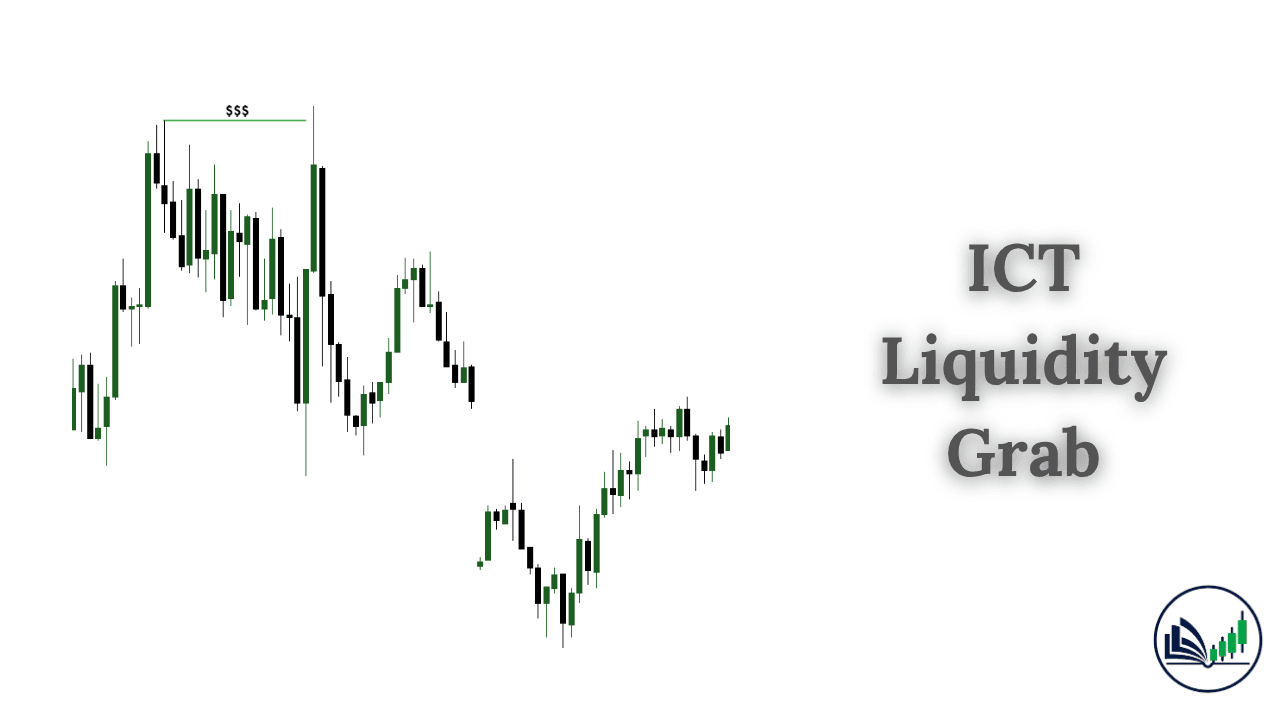
A liquidity grab happens when price briefly pushes past an obvious high or low — often an area where lots of traders have placed stop losses or pending orders — and then reverses sharply back the other way. That short, sharp poke outside the range isn’t random; it’s how large institutional orders get filled without moving the market too aggressively in one direction.
Think of “liquidity” as resting orders parked at predictable spots:
- Stop losses sitting just above recent swing highs
- Stop losses sitting just below recent swing lows
- Pending buy/sell orders around equal highs and equal lows
“Every stop loss you place is a breadcrumb. Liquidity grabs are the market following the trail.”
When enough of these orders cluster together, that price level becomes an attractive target — not because of a specific pattern, but because there’s real volume waiting to be triggered there.
Liquidity Grab vs Liquidity Run: What’s the Real Difference?
| Feature | Liquidity Grab | Liquidity Run |
| Direction after the move | Reverses sharply | Continues in the same direction |
| Purpose | Counter-trend reversal signal | Trend-continuation signal |
| Typical use | Reversal or scalping entries | Trend-following entries |
| Price behavior | Sharp, short-lived spike | Steady, sustained push |
In short: a liquidity grab takes the stops and turns around, while a liquidity run takes the stops and keeps going. Both target the same kind of resting orders — the difference is entirely in what price does afterward.
Common Liquidity Grab Scenarios
Liquidity grabs tend to repeat in a handful of recognizable situations:
1. Equal Highs / Equal Lows Sweep
When price touches the same high (or low) two or more times, it builds an obvious pool of resting stop orders. A grab through that level, followed by a fast reversal, is one of the cleanest liquidity grab signals.
2. The Judas Swing
Judas Swing is common during session opens (like the London or New York open), price makes an early false move in one direction — trapping breakout traders — before reversing hard into the actual intended direction for the session.
3. Old Session High/Low Sweep
Price often reaches back to sweep the previous day’s or previous session’s high or low before making its real move, since those levels naturally accumulate liquidity overnight.
4. Inducement Before the Real Move (IDM)
A smaller, local high or low is swept first to “induce” early trade entries before the larger, more significant liquidity pool is targeted next.
“Liquidity grabs rarely happen once. The market often taps the smaller trap before going for the bigger one.”
How to Trade a Liquidity Grab Strategy
Here’s a simplified, step-by-step way to approach it:
- Mark obvious liquidity pools — equal highs/lows, old session highs/lows, or untested swing points.
- Wait patiently for price to sweep through that level.
- Watch for a quick rejection — a wick, not a sustained close beyond the level.
- Look for a change of character (CHOCH) or market structure shift on a lower timeframe.
- Enter on a retracement into a fair value gap or order block formed during the reversal.
- Place your stop loss just beyond the liquidity grab wick.
- Target the opposite side of the range or the next liquidity pool.
“You don’t trade the grab itself — you trade what happens right after it.”
That last point matters more than anything else in this guide. The sweep alone is not a signal; it’s the reaction to the sweep that confirms the trade.
Liquidity Grab Mistakes Beginners Keep Making
Even once traders understand the theory, execution often falls apart. Watch out for these common errors:
- Entering the moment price breaks a level, instead of waiting for the reversal confirmation.
- Confusing a grab with a genuine breakout. Not every sweep reverses — some simply continue as a liquidity run.
- Ignoring the higher timeframe trend, taking counter-trend grabs that fight the dominant direction.
- Skipping structure confirmation, entering purely because “price touched a high.”
- Setting stops too tight, getting caught by a second, deeper liquidity grab before the real reversal.
- Overanalyzing every wick on lower timeframes, mistaking normal noise for a meaningful sweep.
“A liquidity grab without confirmation is just a wick with a fancy name.”
Why Liquidity Grabs Matter So Much in ICT Trading
Liquidity grabs are less about predicting the future and more about reading intent. Institutions can’t fill massive orders without enough opposing volume in the market, and resting stop orders provide exactly that. Once you start viewing price through this lens, sudden spikes and “fakeouts” stop feeling random — they start looking like a repeatable, logical pattern that shows up across every market and every timeframe.
Final Thoughts
The ICT liquidity grab concept reframes something most traders experience painfully — getting stopped out right before the “real” move — into something you can actually anticipate and trade around. It’s not about predicting exact tops or bottoms; it’s about understanding where resting liquidity sits and waiting for confirmation before committing capital.
“You stop fearing stop hunts the moment you learn to trade the other side of them.”
Start by marking obvious liquidity pools on your charts — equal highs, equal lows, and untested session extremes — and simply observe how price reacts around them before risking real money. Over time, the pattern becomes second nature.

I’m Abdullah Shah, a content writer with three years of experience in crafting engaging and informative content. My background in market analysis complements my work, allowing me to create content that resonates with audiences. I’m also a seasoned practitioner in the forex and crypto markets, with a strong foundation and deep interest in finance. My passion for the financial world drives me to produce content that is both insightful and valuable for those interested in understanding market trends and financial strategies.