In SMC and ICT trading methodology, you have noticed one phrase used again and again: “valid pullback.” At first, this might sound like just another fancy trading term, but it is actually one of the most important skills a trader can develop.
Learning to spot a valid pullback in ICT price action trading can be the difference between entering a trade with confidence and jumping into a move that is about to fall apart.
This concept is related to SMC market structure analysis. Incorrect marking of a pullback can lead to incorrect analysis; that is why identification of a valid pullback is an important part of market structure analysis.
Core Concept: In ICT trading methodology, a valid pullback refers to a temporary price retracement within a larger trend, where traders look for opportunities to enter trades in the direction of the prevailing trend.

Table of Contents
What is a Pullback in Trading?
Markets move by creating impulse price moves and corrections. A pullback is a short, temporary move against the main trend. The movement of price against the main trend is known as a correction. Corrections in the main trend can be temporary (minor) or deep.
Before continuing the prevailing trend, it pauses and dips slightly before continuing to climb. That dip is the pullback. It is not a reversal. Correction phases are more like the market catching its breath before continuing in the same direction.
The following are the characteristics of a pullback that make it different from a reversal:
- The nature of a pullback is temporary. It is not considered a trend reversal but a short-term counter-trend price movement within the existing trend.
- Pullbacks are not limited to specific markets. The price action of any instrument is composed of impulse swings and corrections (pullbacks).
- Pullbacks, especially deeper pullbacks, often present opportunities.
Learning the characteristics of a pullback is one of the first skills that enables traders to make a difference between a pullback and a reversal. After that, it becomes much easier once you understand the concept of a valid pullback.
Valid Pullback in SMC & ICT Trading
It is important to remember that a pullback is a retracement move, but not all retracements are considered valid pullbacks.
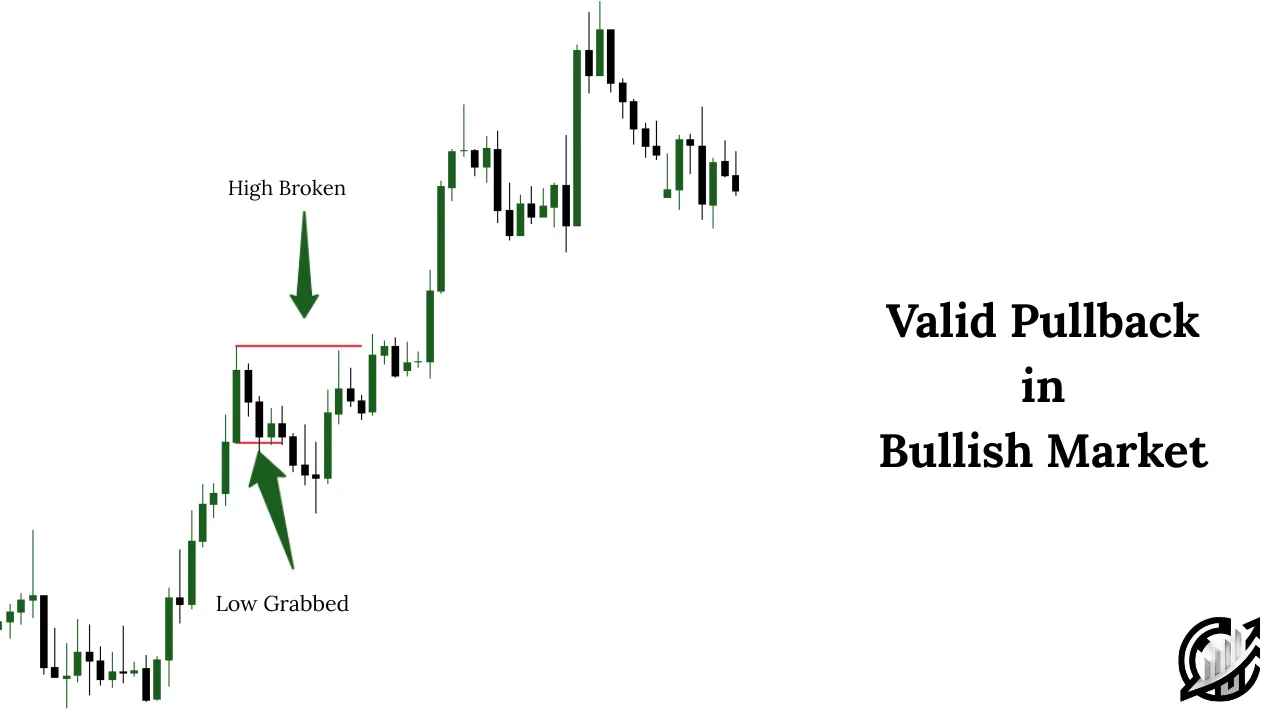
In an uptrend, a pullback candle must grab the low of the highest candle.
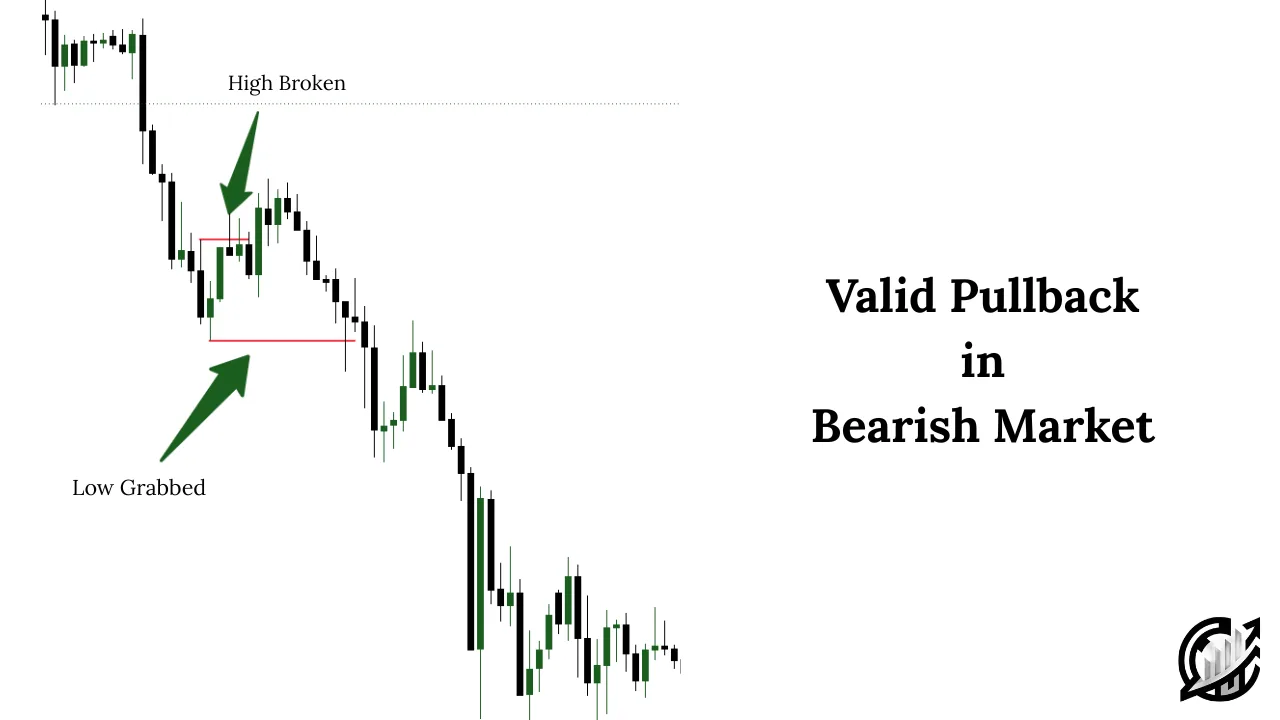
In a downtrend, a pullback candle must grab the high of the lowest candlestick.
In simple terms, a valid pullback:
- Respects the trend. It does not break the most recent important high or low that defines the trend.
- Moves into an area of interest. This is usually a previously significant zone on the chart, such as an order block, a fair value gap (FVG), or the premium and discount zones of the recent price swing.
- Shows signs of slowing momentum. The pullback often looks smaller and slower compared to the strong move that came before it.
- Often involves a small liquidity grab. Price may briefly poke above or below a recent high or low before turning back in the trend’s direction.
If a pullback breaks these rules, especially if it moves past the point that defines the current trend, it is no longer considered valid — it may actually be a sign that the trend is changing.
Valid Pullback vs Invalid Pullback
A valid pullback stays within the boundaries of the existing trend structure. If the market is in an uptrend, a valid pullback will not break below the most recent higher low. It simply retraces part of the way down before buyers step back in.
An invalid pullback, on the other hand, breaks through that important structural point. When this happens, it usually signals that the balance of power between buyers and sellers has shifted. This is often referred to as a change of character (CHOCH) or, if it happens more decisively, a market structure shift (MSS).
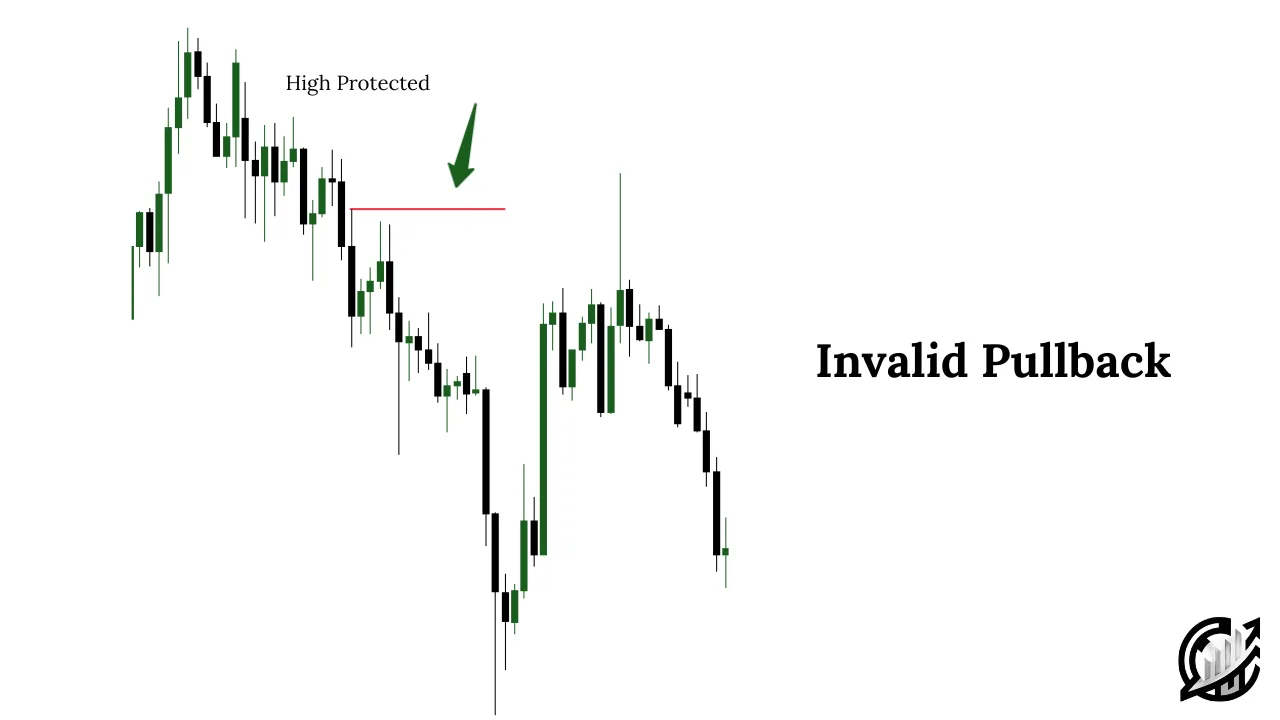
Beginners often make the mistake of treating every dip as a buying opportunity, without checking whether the pullback has actually stayed within valid boundaries. This is one of the fastest ways to enter a trade just before the trend actually reverses.
Identification of Valid Pullback in Uptrend Market (Bullish)
Identification of a valid pullback in a bullish market is not a difficult task. It takes nothing but a careful analysis of candlestick patterns and price action. The following steps are included in the identification of a valid pullback:
The first step is to identify the last highest bullish candlestick. The highest candle is significant because it represents the most recent peak in the bullish movement.
After identification of the highest candle, the second step is to mark the low of the same candle. This low of the candle is a critical level for evaluating the validity of the pullback.
The third step is the decisive one. During the pullback, observe whether the price goes below the low of the highest bullish candlestick. This can happen through a wick (where the price briefly dips below the low but closes above it) or through a full candlestick close below the low. The “grabbing” of this low is crucial because it may indicate that the market is testing the strength of this level and hunting for liquidity.
After the low has been grabbed, the next step is to see if the price breaks above the high of the highest bullish candlestick. This break above the high signifies that the bullish momentum has resumed and the pullback is likely over. It confirms that the market has absorbed the selling pressure during the pullback and is now continuing in the direction of the original uptrend.
These are the general criteria for identification of a valid pullback. A real market example is given below:

Other than the pullback, the most satisfying thing in the chart is that the market grabbed the low of the strongest bullish candlestick. It is because not all, especially ICT traders, consider SMC pullback a valuable trading strategy. They would prefer a strong corrective phase (pullback to premium and discount zone) before the continuation of the trend.
Identification of Valid Pullback in Downtrend Market (Bearish)
Identification of a valid pullback in a bearish market is not a difficult task. It takes nothing but a careful analysis of candlestick patterns and price action. The following steps are included in the identification of a valid pullback:
Our first step is to identify and locate the lowest bearish candlestick before the market begins to pull back. This represents the most recent point of significant downward move.
After identification of the last bearish candlestick, mark the high of the candle. This high serves as a crucial level for assessing the validity of the pullback.
During the pullback (i.e., during the formation of bullish candles), observe whether the price goes above the high of the lowest bearish candlestick. This could happen through a wick (where the price briefly touches or slightly exceeds the high but closes below it) or through a full candlestick close above the high. The “grabbing” of this high is critical because it may indicate that the market is testing the strength of this level, possibly hunting for liquidity.
After the high has been grabbed, the next step is to see if the price drops below the low of the lowest bearish candlestick. This break below the low signals that the bearish momentum has resumed and the pullback is likely over. It confirms that the market has absorbed the buying pressure during the pullback and is now continuing in the direction of the original downtrend.
This is the general criterion for identifying a pullback in a bearish trend. A real market example is given below:

Here, in a circle, you can observe that more than one candle breaks the high of the last bearish candlestick. A pullback can take place with multiple candlesticks.
Building an ICT Pullback Strategy
After understanding everything about valid pullbacks, traders can craft trading strategies by adding confluence of SMC and ICT concepts. Here is a simple approach that can be used for taking sniper entries:
- Analyze the market structure on a higher timeframe. Higher timeframe directional bias clears your doubts about direction and context of the market.
- Mark the important and valid structural points (swing highs and swing lows).
- After that, wait for price to retrace into a logical trading zone supported by SMC and ICT concepts.
- You can take further confirmations by looking for a liquidity sweep near the retracement area.
- Place trade orders after confirmation. You can use a rejection candle or a shift in market structure in a lower timeframe as a confirmation.
- Place your stop-loss beyond the structural point, and target the next liquidity area.
Watch Out for Institutional Inducement Points
One important trap to be aware of is inducement trading. Sometimes what looks like a valid pullback into an order block is actually designed to draw in early buyers or sellers before the market moves the opposite way. This is why confirmation matters so much — entering the instant price touches a zone, without waiting for signs of rejection, can lead to getting caught in one of these traps.
Common Mistakes Beginners Make
As you begin practicing valid pullback identification, keep an eye out for these frequent errors:
- Ignoring the higher timeframe trend. A pullback that looks valid on a small timeframe may actually be against the dominant trend on a larger one.
- Entering too early. Jumping in as soon as price touches a zone, without waiting for confirmation, increases your risk of getting caught in a fake move.
- Treating every retracement as tradeable. Not every small dip needs to be traded. Patience is often more valuable than activity.
- Overlooking risk-to-reward pullback trading principles. Even a well-identified pullback needs a sensible stop loss and a realistic profit target to be worth trading.
Using Tools and Indicators for Faster Analysis
If manually marking structure and zones feels overwhelming at first, you are not alone. Many traders use a valid pullback indicator TradingView script, or similar ICT pullback indicator MT4/MT5 tools, to automatically highlight structural points and potential pullback zones. These tools can save time, but they work best when paired with your own understanding of why a pullback is valid, rather than being used unthinkingly.
Final Thoughts
A valid pullback is more than just a dip in price — it is a structured retracement that respects the trend, aligns with meaningful chart zones, and often includes signs of liquidity being cleared before the market continues. For beginners, the key points to remember are:
- A pullback is a temporary move against the trend, not a reversal.
- A valid pullback respects the recent structural high or low, while an invalid one breaks through it.
- Confirmation tools such as order blocks, fair value gaps, and liquidity sweeps can help strengthen your analysis.
- Watching for inducement helps you avoid common traps set for early entries.
- A complete strategy combines trend direction, structural confirmation, and sound risk management.
Mastering the valid pullback concept takes practice, but it is one of the most transferable skills in SMC and ICT trading. Once you can consistently tell a valid pullback apart from an invalid one, you will find yourself entering trades with far more confidence and far less guesswork.
FAQs
How many candles can a valid pullback have?
There is no fixed number. A valid pullback can form from a single candle or a small cluster of candles. What matters most is that the retracement stays within the trend’s structure and does not close beyond the key structural point, not how many candles it takes to form.
Does a valid pullback always need a liquidity sweep?
Not always, but it is common. Many traders see a small sweep of a recent high or low as added confirmation, since it suggests weak positions are being cleared before the trend resumes. A pullback can still be valid without one, though the setup is often considered stronger with it.
Is a valid pullback the same as an order block?
No. A pullback is the price movement itself, while an order block is one of several possible zones where that pullback might find support or resistance. Order blocks, fair value gaps, and premium/discount zones are tools used to analyze where a pullback is likely to react.
Can a valid pullback still fail?
Yes. No pattern guarantees success. Even a textbook valid pullback can fail if broader market conditions change, such as unexpected news events or shifts on a higher timeframe. This is why confirmation and proper risk management remain essential, no matter how clean a setup looks.

I’m Abdullah Shah, a content writer with three years of experience in crafting engaging and informative content. My background in market analysis complements my work, allowing me to create content that resonates with audiences. I’m also a seasoned practitioner in the forex and crypto markets, with a strong foundation and deep interest in finance. My passion for the financial world drives me to produce content that is both insightful and valuable for those interested in understanding market trends and financial strategies.