Table of Contents
All bullish reversal pattern almost shares same characteristics. Bullish Harami pattern is the among the reversal pattern. The word “harami” is an old Japanese word for pregnant. It is reverse of bullish engulfing pattern, but it is not strong reversal pattern like bullish engulfing pattern. However, we can combine other factors in order to confirm its validity. It is included in multiple candlestick patterns. This article explores the structure and formation, market psychology, and other key factors and considerations.
Bullish Harami Candlestick Pattern
Just like Engulfing pattern, Bullish Harami contains two candles. In market analysis, a trader looks for the weakness or strength of a trend. Among other tasks, technical analyst determines trend health. Harami pattern is a bottom reversal pattern. Bullish harami pattern can be useful in weak downtrend.
Bullish harami pattern is a bottom reversal pattern. The validity of the pattern is dependent upon the trend of the market. There should be a clear downtrend.
Structure and formation of Bullish Harami
Bullish Harami can be easily identified on candlestick chart. It has a specific structure and formation that traders use to identify potential reversals in downtrend. The following are the essentials considered in structure of the candlestick pattern:
- The first candle should be strong bearish candlestick. The color of the candle is red or black in traditional charts. The length of shadow (wicks) vary in length and not the primary focus.
- The second candle can be a bullish or bearish candle. The bullish or bearish nature of the second candle is unimportant. The important thing in second candle is that the session must contain small real body relative to the prior candlestick and the body of the second candle must reside inside the first bullish candle’s body.
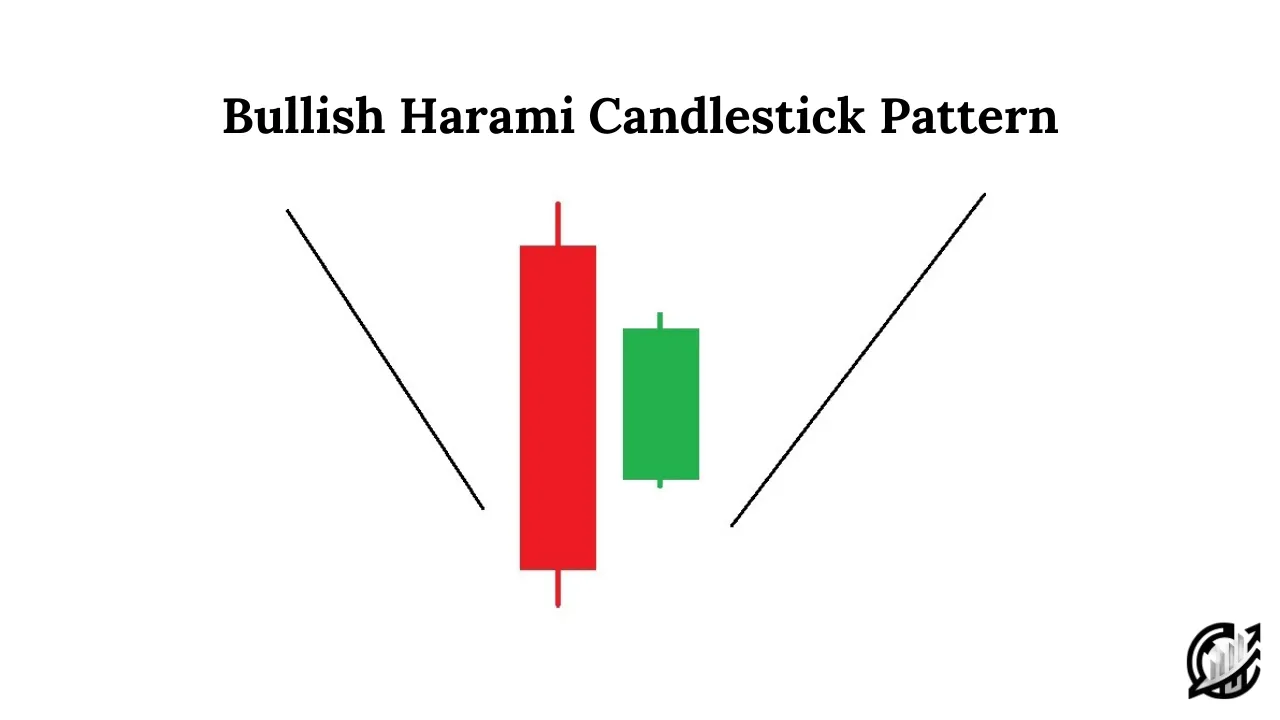
Formation of the candlestick is normal on charts. The true formation of the Bullish harami pattern takes the following things:
- The Bullish Harami pattern forms after a downtrend. This context is crucial because the bullish harami pattern signals a potential reversal of this downtrend.
- First, a strong bearish candlestick appears. This is a clear picture of downtrend and shows that sellers are in control. There is long distance between open and close which indicates strong bearish momentum.
- The formation of next candlestick change the overall context of the market. The appearance of the candle with small real body, with gap up opening indicates weaking of the bearish momentum. The minute real body of the second candlestick must reside inside the first candlestick.
- This pattern itself is not considered as a strong reversal pattern. However, this can stop the market its continuation of the trend. For reversal multiple other confirmations are gathered like volume analysis and supply and demand considerations.
This suggest to us that not all formations of bullish harami pattern are valid. Reliability and authenticity should be our first priority in market analysis. Even a single mistake can lead to huge losses.
Psychology behind Bullish Harami
The psychology behind the bullish harami candlestick pattern explains shifting dynamics between buyers and sellers within the market. Understanding the emotional and behavioral aspects of market participants helps to explain why this pattern signals a potential reversal in a downtrend.
- Sellers are confident in taking the price lower. The market is in a clear downtrend. Sellers are pushing prices lower with confidence. Appearance of strong bearish candlestick is a sign of strong selling pressure.
- The second candle represents emergence of doubt. The second candle is smaller than first one. Its gapping down opening and its body completely contained within the body of the previous bearish candle indicates a psychological shift in market momentum. It indicates sellers are losing momentum.
- The appearance of bullish harami pattern introduces uncertainty among market participants. The smaller size of the second candle suggest that the bearish sentiment is being challenged by emerging bullish sentiment.
- Additional bullish signals increase confidence of buyers. If the market follows through with the additional bullish signals after the bullish harami pattern, it confirms that buyers are taking control. This could lead to a more significant uptrend.
- Once the reversal is confirmed, the psychological shift from bearish to bullish is complete.
The pattern signals a potential shift in control from sellers to buyers, driven by growing doubts about the sustainability of the uptrend.
Confluence with Bullish Harami
Candlestick analysis is just one aspect of market analysis. There are other key factors that you can employ in order to gain clarity and objectivity. The following are the factors combined with the candlestick pattern:
- It is important to consider and analyze market context and trend. Bullish harami pattern is significant only when it occurs after a downtrend. The strength and duration of the prior trend can impact the pattern’s reliability.
- Traders must consider overall market structure. If the overall market is generally bearish, the bullish harami pattern might suggest a temporary pullback rather than a complete reversal.
- Other than price action confirmations, volume analysis on candlestick pattern are also important for market analysis. A high volume on first candle indicates strong selling interest. Lower volume on the second candle can indicate decreasing buying interest, but if volume is high, it might signal that buyers are taking control. It makes the pattern more reliable.
- It is important to look where the pattern is appearing. It should be near the prior demand zone where downtrend might naturally struggle to continue.
- Momentum technical indicators are also employed in technical analysis. If the pattern appears when the market or asset is oversold (indicated by technical indicators like RSI), it strengthens the case for a potential reversal.
- The significance of the bullish harami pattern varies depending on the time frame. It tends to be more reliable on higher time frames (e.g., daily or weekly charts), where market sentiment is clearer.
- Be aware of any fundamental developments that could impact the market. Even a technically strong pattern can be overshadowed by significant news, such as earnings reports, economic data releases, or geopolitical events.
By considering these factors, traders and investors can better gauge the reliability of the pattern and make more informed decisions regarding their trades or investments.
How to trade Bullish Harami Pattern?
The following steps we cover in order to trade the pattern:
- Identify the pattern in a downtrend near demand zone.
- Confirmation is the key to trade the pattern. Check prior trend and analyze volume in bullish harami pattern. Wait for additional bearish confirmation, such as a close above the high of the second candle.
- Place a stop-loss just below the low of the first candle in the pattern. This protects you in case the pattern fails and the downtrend continues.
- Set an initial profit target at a nearby resistance level.
- Exit the trade when the price reaches your predetermined target. If the price moves against you and hits your stop-loss, exit the trade to limit your losses.
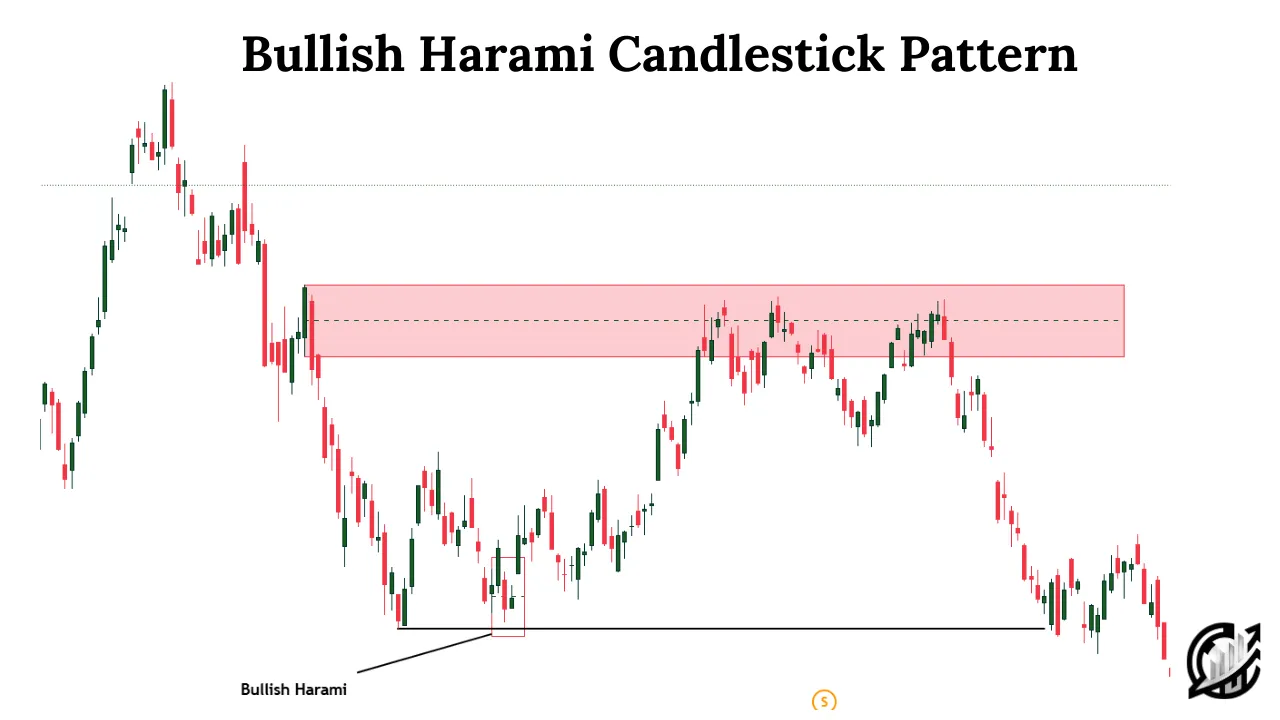
By following these steps, you can effectively trade the pattern, balancing risk and reward while leveraging market psychology to anticipate potential reversals.
FAQs
What is a Bullish Harami pattern?
The Bullish Harami is a two-candlestick pattern that signals a potential reversal from an uptrend to a downtrend. This pattern contains a large bullish candlestick followed by a smaller bearish candlestick. The second candlestick must be fully contained within the body of first candlestick.
How reliable is the Bullish Harami pattern?
The Bullish Harami pattern can be a reliable signal for a potential reversal, but its effectiveness depends on factors like the strength of the preceding trend, volume, and the presence of confirmation signals. It is often more reliable when used in conjunction with other technical indicators and confirmation.

I’m Aatiq Shah, a dedicated forex and crypto market practitioner with three years of hands-on experience. Currently, I’m working as a Financial Manager. My journey in the world of finance has equipped me with the skills and knowledge needed to navigate the complexities of the forex and crypto markets.