The smart money concept is a refined and institutional centered approach to market analysis. It is totally different from traditional price action. The central notion of SMC price action is that markets are driven by large participants. The participants in forex markets can be institutional investors, hedge funds, and banks. Traders collectively call them “Smart Money.”
This article explores two major dimensions of smart money concepts: Advance price action techniques, and the time aspect of smart money.
SMC Price Action and Time
At its core, SMC is a price action trading approach that focusses on liquidity, market structure, and institutional footprints. This can be used to predict future price movement of an asset. The central idea is that large institutions manipulate price to grab liquidity.
However, SMC is not just limited to price action trading approach. It introduces a completely new perspective on how markets truly function. SMC uncover two major dimensions in technical analysis: advance price action techniques and time aspect in trading.
The first component introduces price action principles of SMC. SMC price action helps explore market structure, and helps identify when break in structure and change of character occurs. In this element, trader’s ultimate goal is to locate liquidity pools and identify institutional footprints. These are the PD arrays like order block and fair value gap.
The second component is what distinguishes SMC from all other trading models. According to Michael, smart money operates specific times of the day, week, and month. Major price movements often occur in London session and New York trading session.
This time and price confluence of SMC allows traders to align their entries with institutional order flow. Traders who master both aspects begin to see the market as a structured system of liquidity delivery rather than random price movement.
Price Action Principles of Smart Money Concept
SMC price action is not just another version of simplistic price action trading. SMC reveals logic behind market movement by focusing on how liquidity, timing, and structure aligns to form predictable trading opportunities.
SMC is established upon several core price action principles: structure, liquidity, order blocks, imbalance (FVG), inducement, and premium and discount zones. These are the few central price action principles forming a framework that allows traders to identify where price is likely to move next.
Structure: The Backbone of SMC
Structure mapping in SMC forms the foundation of the smart money concept. It represents natural rhythm and flow of price. Price makes higher highs and higher lows in an uptrend, and lower lows and lower highs in downtrend.
SMC market structure is interpreted through two main tools: the break of structure and the change of character. Break of structure confirms price continuity in the same direction. On the other hand, change of character signals a potential trend reversal.
Take the example of an uptrend where price forms higher highs and higher lows. when the market suddenly fails to make a new high and breaks the most recent higher low, a change of character occurred.
In SMC price action, understanding structure gives traders a roadmap of intention.
Liquidity
Liquidity is the most important aspect and element of smart money concept. One of the central principles of SMC is that institutions need liquidity to execute their large orders. Institutions trade in large volume that cannot be executed all at once without affecting price. Therefore, they create liquidity zones with the help of algorithm to enter or exit their trades.
These liquidity zones are often found above swing highs and swing lows. These are the price points where retail traders place their stop-loss orders. These areas are also known as liquidity pools. Market makers intentionally push price towards these zones to grab liquidity before reversing price. In traditional technical analysis, this action is known as stop hunts.
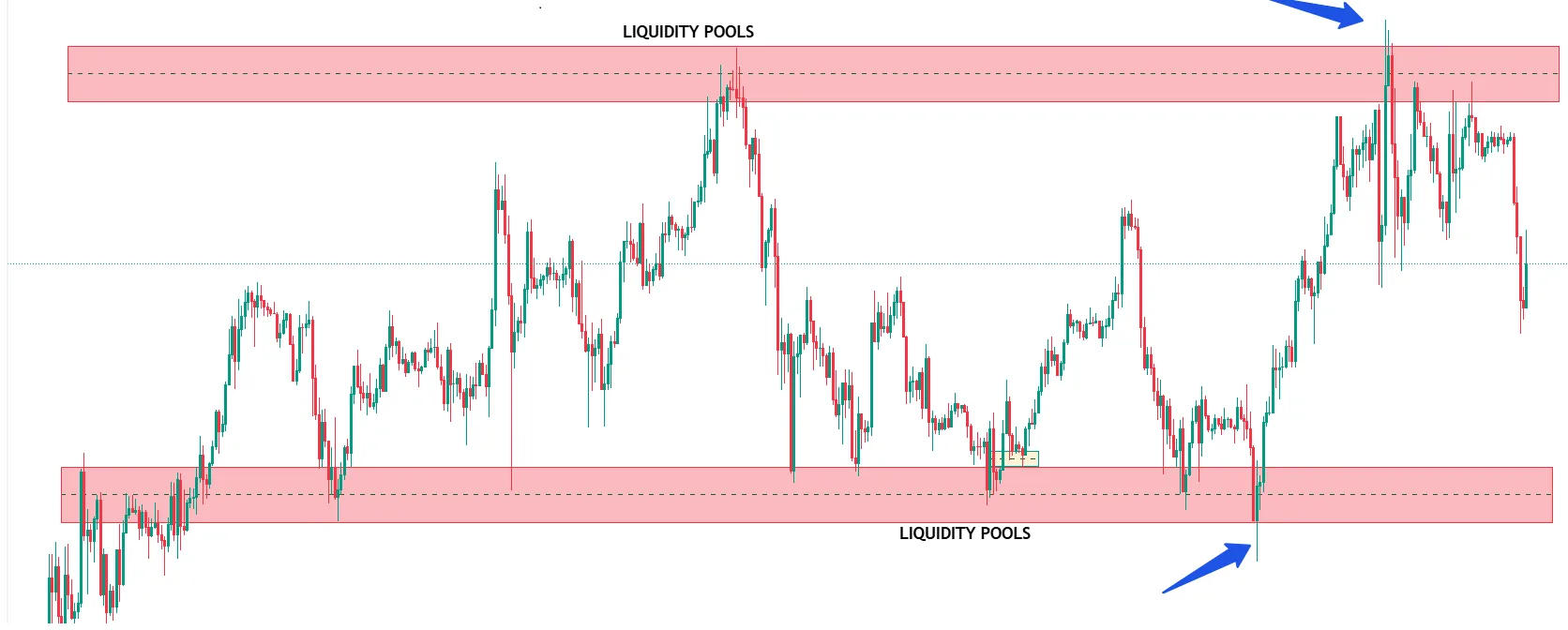
Liquidity tells us where the market is likely to go. It is because market always seeks liquidity before making a real move.
Institutional Footprints (Order Blocks)
Order block is one of the most powerful and most common concepts in SMC. Usually, it is the bullish or bearish candlestick before a strong impulsive move. However, Micheal explains that it can be a set of strong bullish or bearish candlesticks before a strong impulsive move.
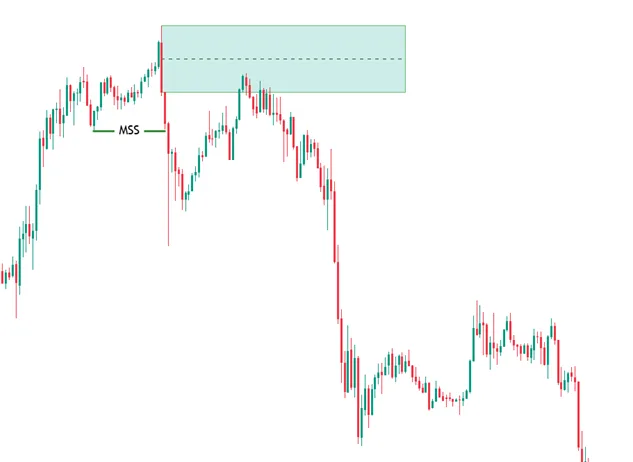
Essentially, it is a footprint left behind by smart money. It represents an area where large positions were accumulated or distributed. Traders use these levels as entry points. When price revisit an order block, price often reacts to it sharply because institutions are mitigating their remaining orders.
Imbalance (FVG)
An imbalance occurs when price moves strongly in one direction. It leaves an inefficient area on the chart. Imbalance is also known as fair value gap.

In technical terms, an FVG appears when there is a gap between consecutive candles. The market often retraces to these imbalanced areas later to rebalance or fill the inefficiency. Imbalance provide insight into market efficiency and institutional intent.
Inducement
Inducement is a structural trap designed to lure retail traders into wrong positions just before market makes its real move. Inducements can be of different forms like double tops and bottoms, or minor support and resistance areas. However, in this case, it is the recent swing low or high depending on trend.
For example, before an upward movement, the market might form a small higher low. Smart money drives the price slightly below that low to induce liquidity and collect those stops before pushing price upward.
Having an idea of inducement saves traders from being manipulated by the market. For that traders should learn patience and wait for confirmations.
P/D Zones
The premium and discount model defines the overvalued and undervalued price. It is determined by drawing a fib retracement or identifying equilibrium of a swing range.
This concept ensure that traders align entries with value. The premium and discount framework also connects directly with order block and FVG. It allows traders to pinpoint high-probability zones for entries.
Combining Time with SMC Price Action
In the standard price action trading, much attention is given to structure. Time is the missing link that must be combined with SMC price action for logical and high-probability trading.
According to smart money concepts, the institutions do not just move price randomly, but often within specific sessions, kill zones, and macro-time-windows. Traders should align with these times. It improves the probability of catching real institutional moves.
Sessions, Kill Zones and Institutional Timing
One of the foundational time-concepts in SMC is the recognition of trading sessions and kill zones. Sessions simply marks the open and close of major market like London and New York. The real important lies in kill zones. Kill zones are sub-periods within these sessions that sets institutional order flow.
London kill zone starts at 02:00 AM and ends at 05:00 AM EST (New York Time). The New York kill zone starts at 07:00 and ends at 09:00 EST. Remember that kill zone is not a trading strategy in itself but a window of increased probability for institutions to manipulate price.
Macro Time Windows
Other than kill zones, the second time player is the concept of macro time windows, also known as ICT macros. These are short and scheduled intervals where algorithm is expected to spike.
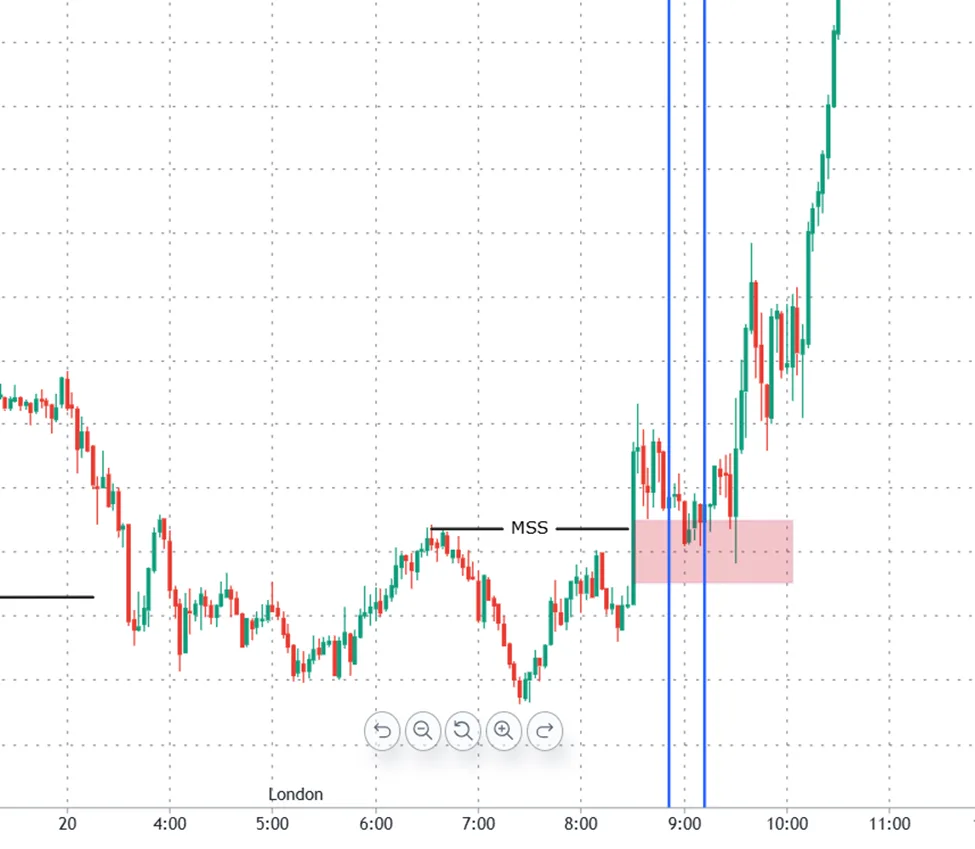
ICT macros are a short order of instructions that create an event in price delivery. These time windows may last from 10-30 minutes and typically occur around key session openings and closings. For example: London macro 02:33-03:00 EST and New York macro 09:50-10:10 EST.
Within these time windows, the algorithm or institutional flow may sweep liquidity, fill FVGs, or shift market structure. You should mark liquidity and inefficiency before the window opens then wait for the price event during the window.
Protraction and Timing of Moves
Impulse is a strong directional price move. On the other hand, protraction is false price move. In market institutions drive price in wrong direction before starting a real move.
It is a manipulative price move that is purposely designed to lure traders in a wrong direction. It creates a false sense of direction in the market, triggering stop-loss orders. Protractions are often brief but can have a significant impact on trader’s positions.
Final Note
SMC provides a powerful framework for understanding institutional behavior and market timing. Just like other trading techniques, it offers insights but never guarantee success. Trading in financial markets involves risk and may not be suitable for all investors.
Always use proper risk management, avoid overleveraging, and test strategies before applying them in live markets. The concepts discussed are for educational purpose only and cannot be considered as financial advice.
FAQs
What is the Smart Money Concept (SMC) in Trading?
It is an institutional trading framework that focuses on liquidity, market structure, and timing. Its ultimate aim is to identify how and when large institutions move the market by engineering liquidity and manipulating price before executing real directional moves.
How is SMC different from Traditional Price Action?
Traditional price action relies heavily on visuals tools like support and resistance, indicators, and trendlines. SMC deeply analyze liquidity pools, order blocks, FVGs to interpret why price moves.
What are kill zones in the context of SMC?
Kill zones are high-probability time periods during which major institutions price movements typically occur.

I’m Abdullah Shah, a content writer with three years of experience in crafting engaging and informative content. My background in market analysis complements my work, allowing me to create content that resonates with audiences. I’m also a seasoned practitioner in the forex and crypto markets, with a strong foundation and deep interest in finance. My passion for the financial world drives me to produce content that is both insightful and valuable for those interested in understanding market trends and financial strategies.